Sigtuna, just northwest of Stockholm, is one of the first towns in Sweden. The first Swedish coins were minted there in 995, and it was the seat of the archbishopric from c. 1060 until 1164, when Uppsala took over. It is likely that several inhabitants in the late 10-12th centuries were literate.
Sigtuna Museum has several artefacts that have been classified as styli. However they don’t look like any of the styli that I’ve seen from other Swedish, Danish or German towns. According to the curator, when they get visiting Russian researchers who study artefacts from the Stockholm region, they start to feel at home when they see the finds from Sigtuna. Possibly the unusualness of the styli points to a Russian/Eastern Baltic style sphere?
I’ve included some artefacts that I’m uncertain whether they actually are styli or something else. Just because an artefact has a pointed end, doesn’t necessarily mean it was used for writing. Artefact identification was done in the field or during post-excavation, and some archaeologists were clearly optimists. These artefacts below, are however proper tools, not just a pointed bone or wood object. But are they styli or something else?
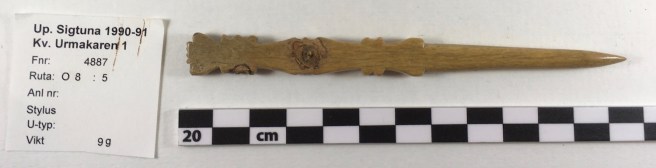
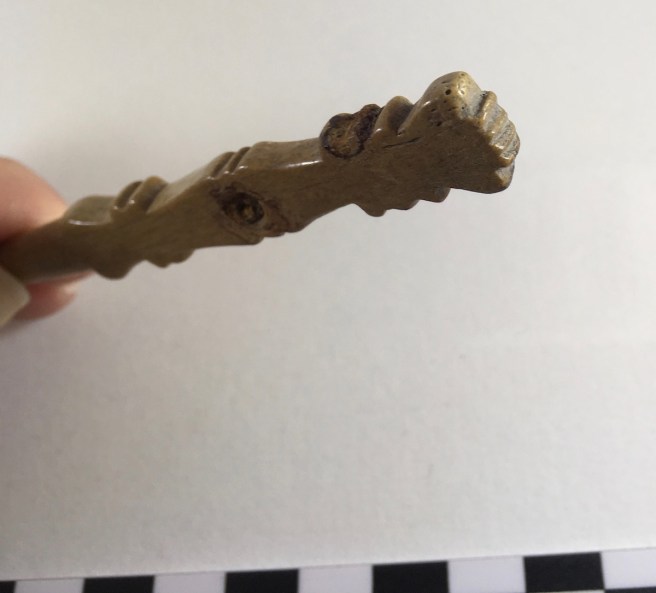
Find No. 4887: If this one wasn’t from a context dated to 990-1000, I’d say it was a hand from a clock. In the middle there is traces of iron, possibly from a rivet, as it’s on both sides of the artefact. The artefact is smooth all over, but with all the decoration on the shaft/top, it would have been difficult to use it to erase text on a wax tablet.
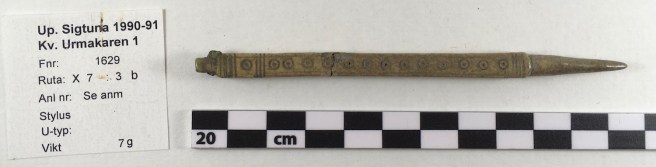
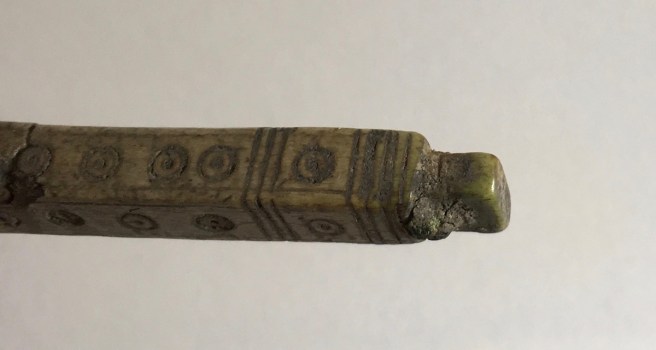
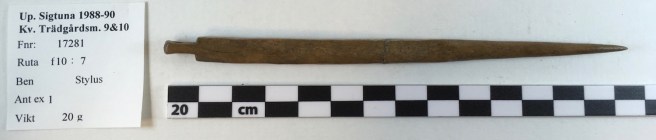
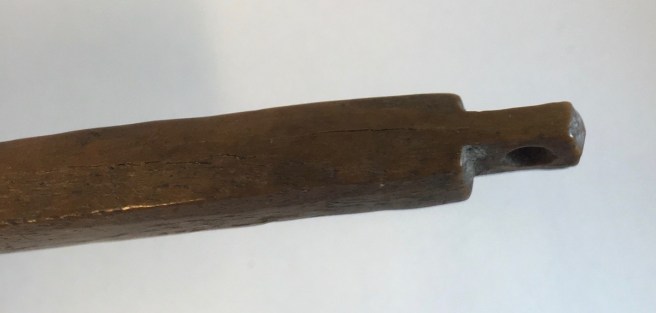
Both Find No. 1629 and Find No. 17281 have a square shaft, ending in a round point. The top is carved to a rectangular section and is perforated. There is metal remains in the perforation of Find.No. 1629, probably from a ring. The top of 1629 is flat, and the top of 17281 is slightly pointed. Find No. 1629 has ring-and-dot decorations on all four sides of the shaft, Find No. 17281 is not decorated.
Regarding dating, Find No. 1629 comes from a graveyard fill (no details yet on the date, but from sometime in the Middle Ages) and Find No. 17281 is from a context dated to 1050-1075.
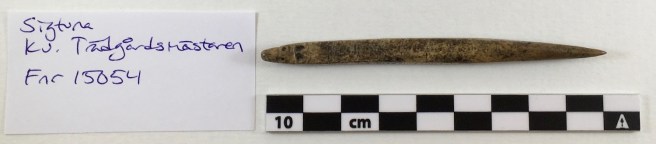
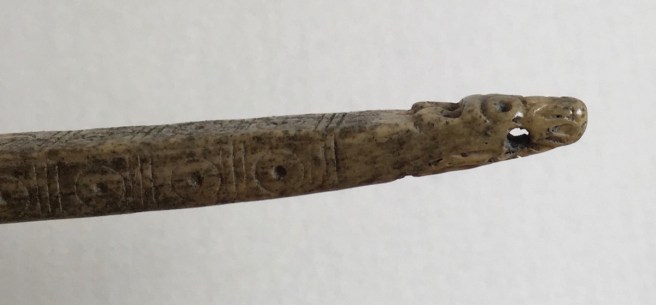
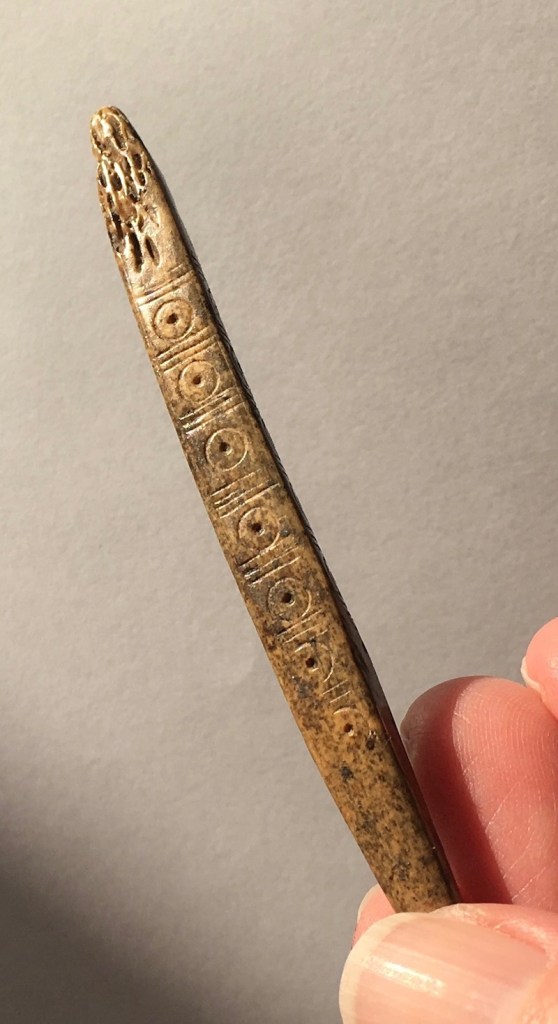
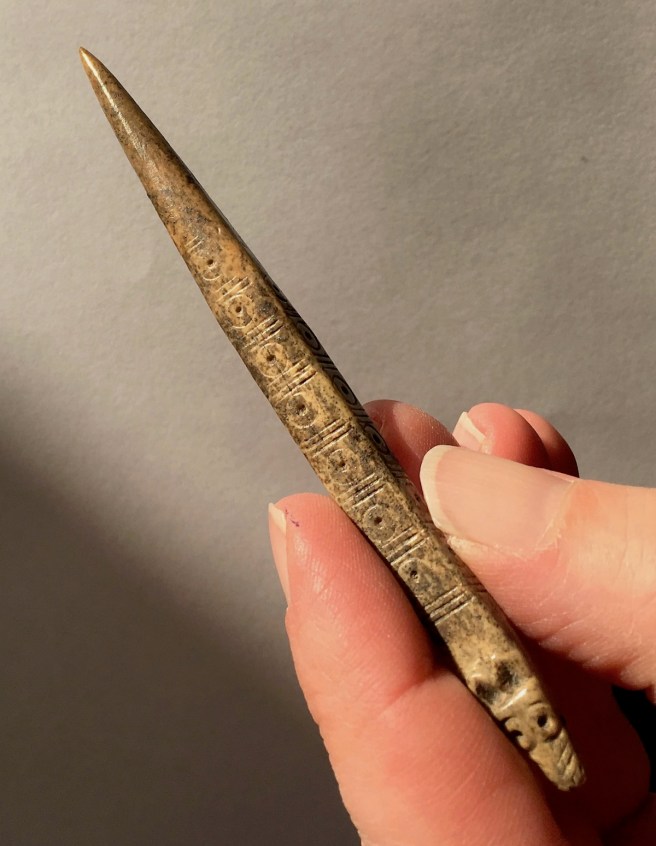
This (and the following) is probably my favourite. Find.No. 15054 (date: 1020-1050) has a square shaft, decorated with ring-and-dot motifs, an animal head (perforated from side to side) and a round point. The decoration has been partially worn off from use. The head is smooth, but since the chin area is full of trabecular bone, I doubt it would have been useful for creating a smooth wax surface. Then again, there is evidence of finger nails being used for smoothing out wax tablets, so a good smoothing head on a stylus is not 100% necessary.
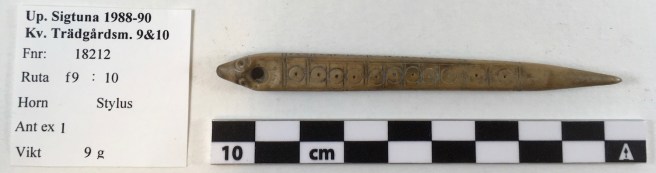
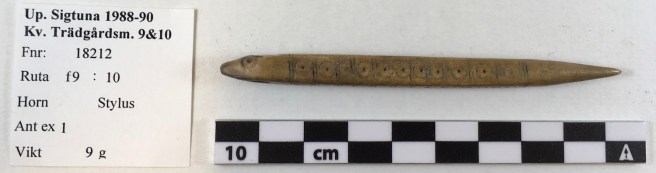
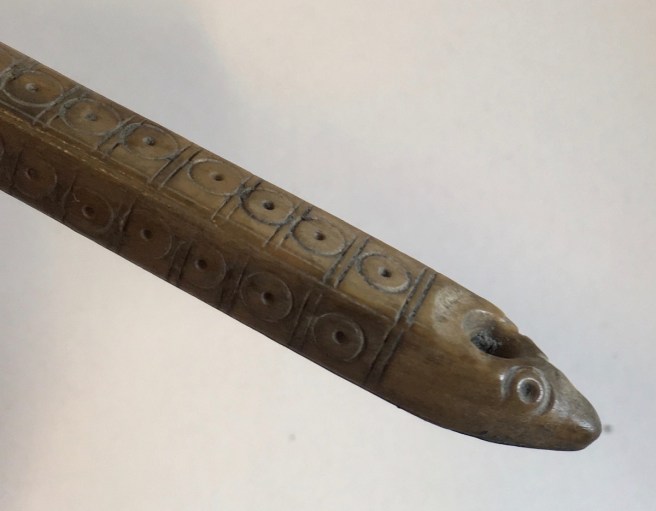
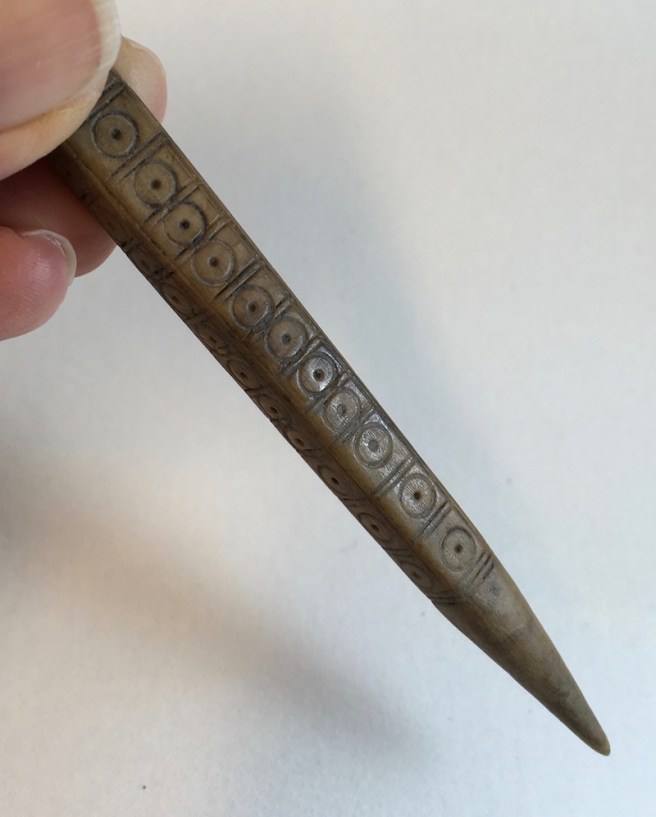
Find No. 18212 is almost identical to Find No. 15054, but is perforated from head to neck instead. The top is smooth, and no trabecular bone is visible. It’s from a context dated to 985-1000.
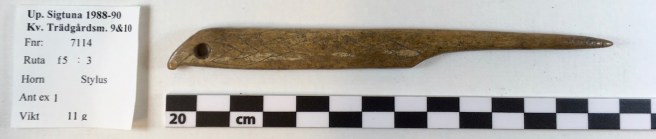
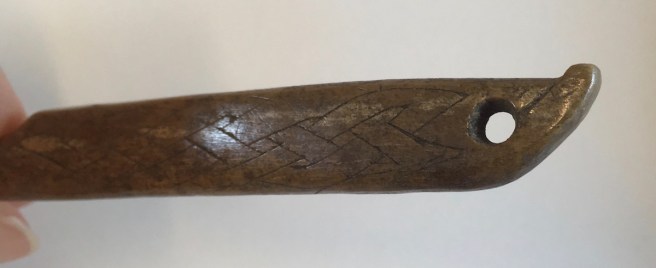
Find No. 7114 has a very unusual shape. The top part has an interlace decoration on both sides. The top is worn smooth, and could have been used for smoothing wax tablets. It’s from a context dated to 1125-1175.

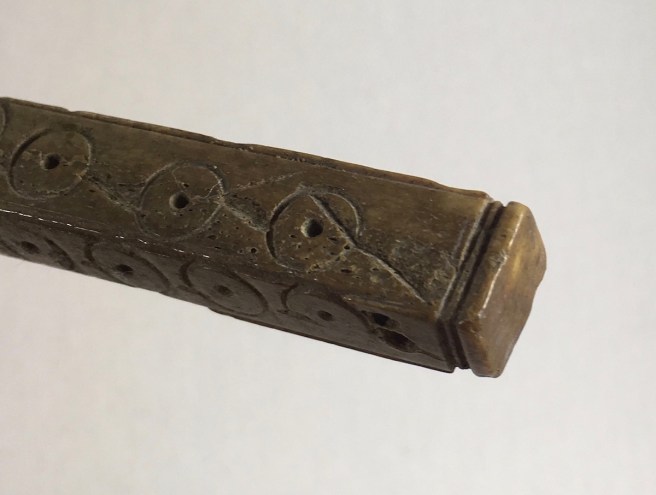
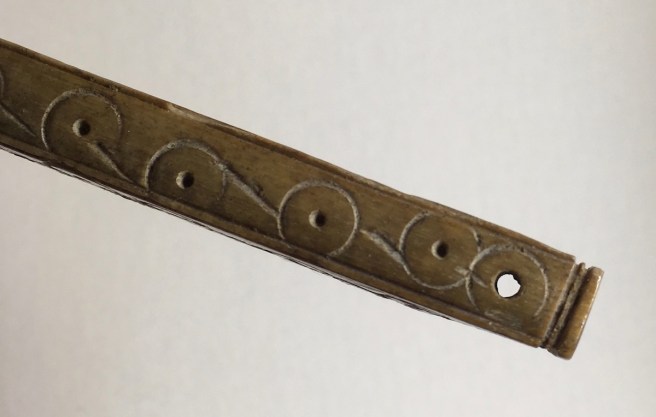
Find No. 13171 (date: 1020-1050) is another one with a square shaft that changes to round towards the point. It is decorated with ring-and-dot motifs and is perforated at the top. The top is smooth, and could potentially have been used to erase a wax tablet.

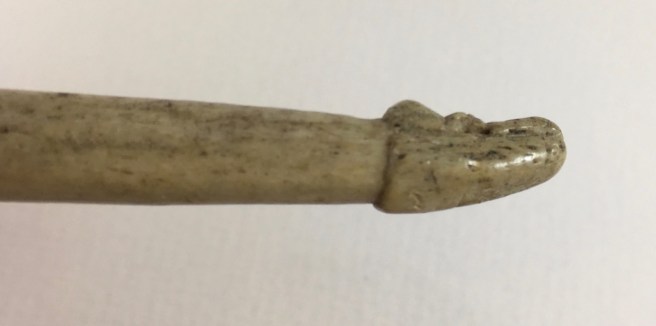
Find No. 1711.f is rather long. Even if the tip has broken off, it would have been over 15 cm long. There are two bulbous bits on the lower third of the shaft, suggesting it couldn’t have been used as a garment fastener. The top has been carved to an animal head. The chin of the animal is very smooth: a potential wax smoother? Unfortunately it’s an old find, and there is no record of what context it came from or its date.

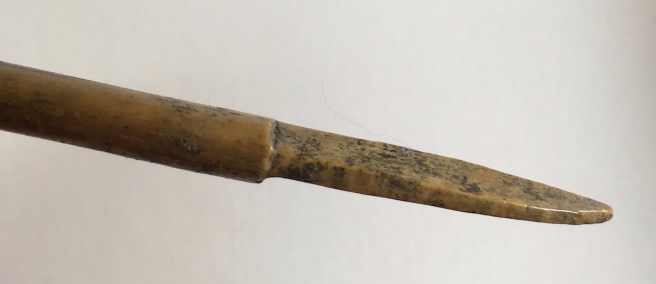
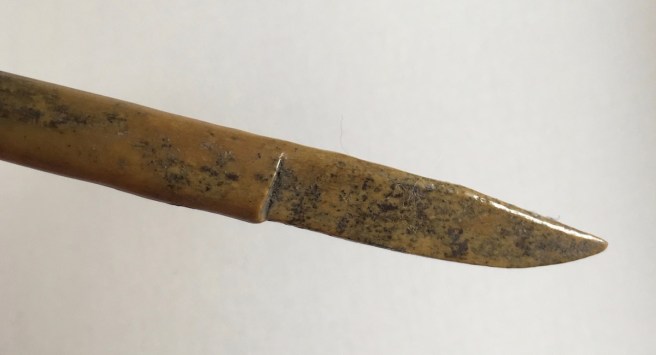
This last artefact category has been called knife blade styli. As far as I know, they have only been found in Sigtuna (N: 3), Lund (N: 6) and Ralswiek (N: 1). But please let me know you have seen them elsewhere!
Find 10790 is the longest, c. 15cm long. The edge of the knife blade is c. 1mm thick, not ”sharp” like the others. It’s dated to 1000-1020.
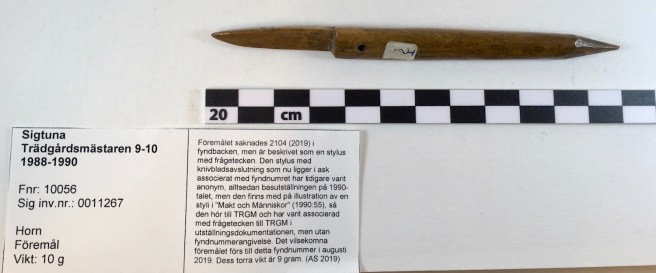
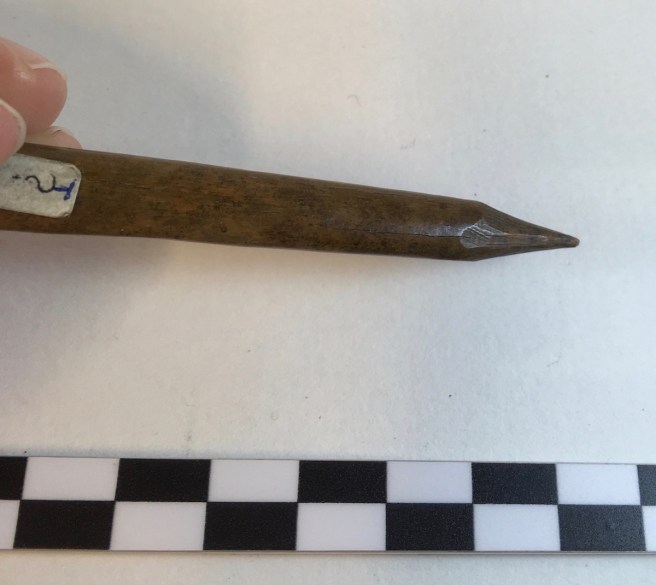
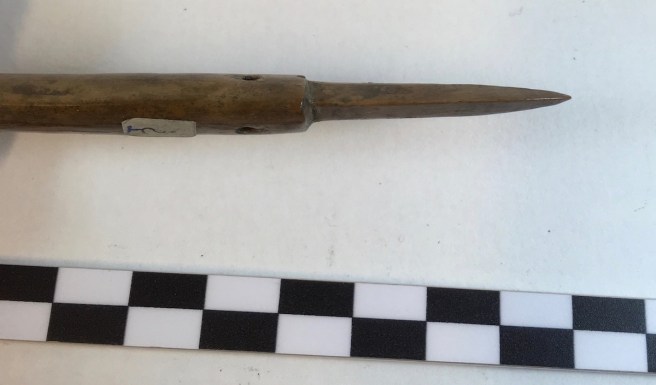
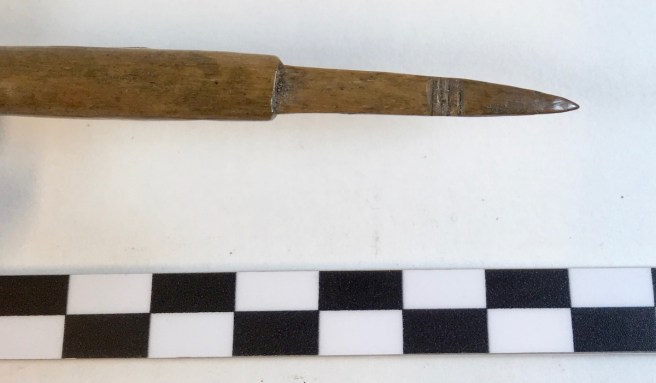
We don’t know the original length of Find No. 10056, since the point has been re-carved. The knifeblade stylus has been perforated, something also seen in a few of the Lund finds. It’s dated to 1050-1075.
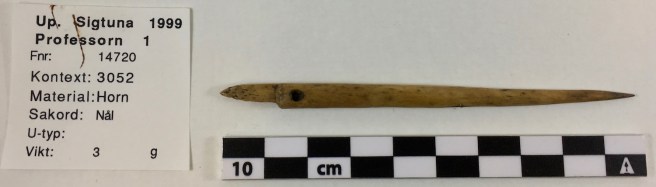
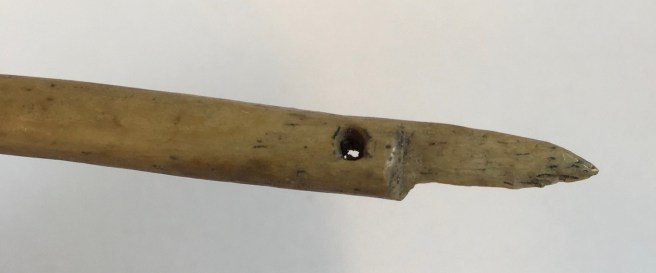
Find No. 14720 is the smallest of all knifeblade styli I’ve seen: only 10cm long. Was it a toy, or did it have the same function as the normal-sized ones? The stratigraphy of the site is not yet finalised, so I don’t know what period it came from.
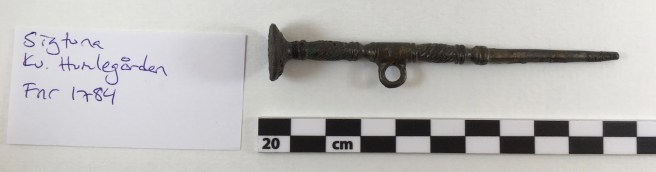
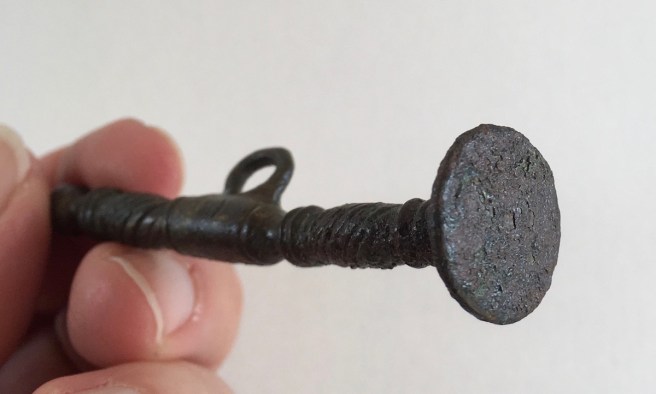
Finally, a mystery iron object. It’s been classified as a stylus, but again I’m not convinced. It has a decorated shaft which becomes plain towards the broken-off point. The top is flat, and I can’t see any indication of decoration. I thought first it could have been a seal of some kind, but the top appears all flat.

 Bones and artefacts